
Take your time.
Put the kettle on.
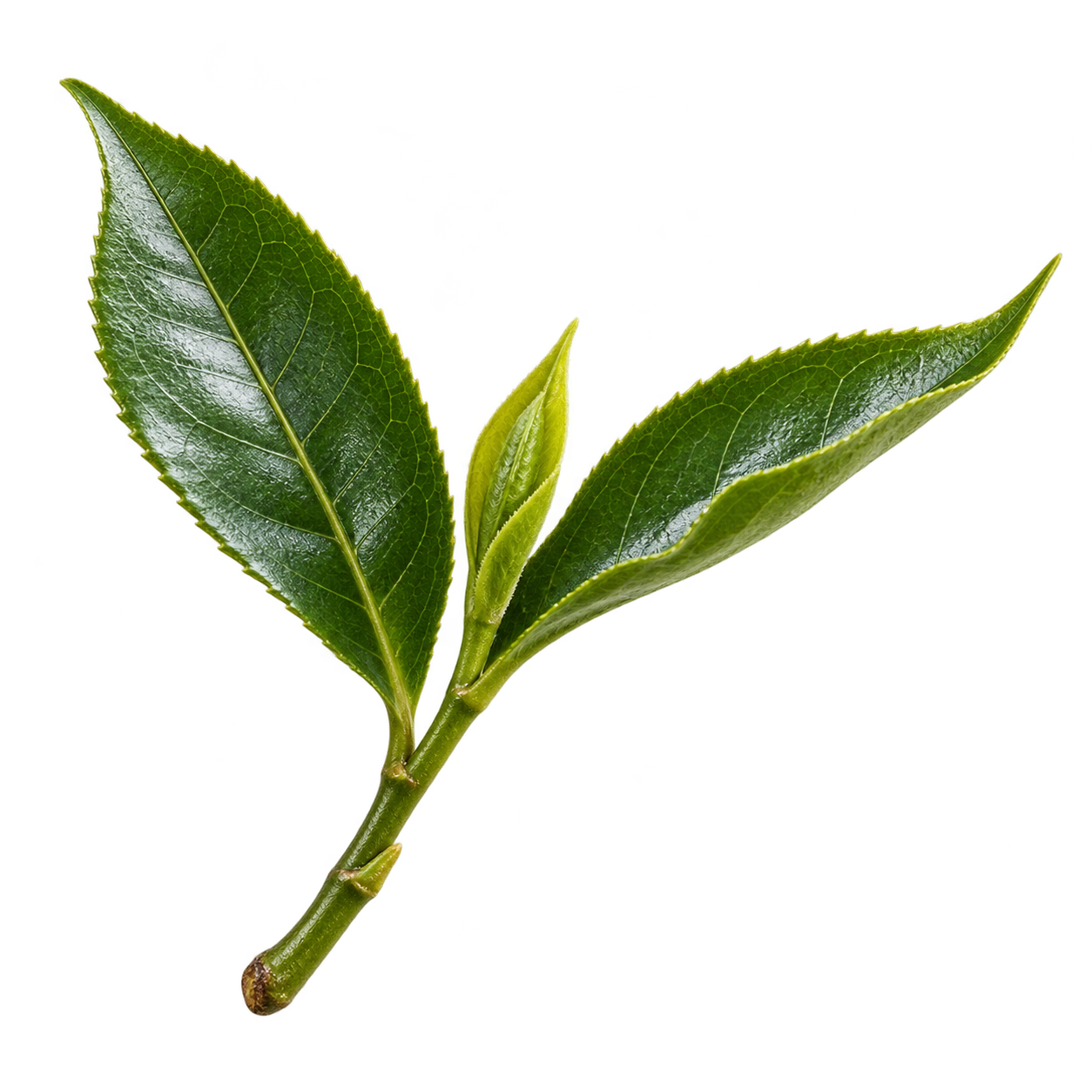
Green tea comes from the tea plant and naturally contains caffeine. Herbal infusions use ingredients such as flowers, herbs or fruit. Many are caffeine free, but some contain caffeine or are blended with tea. Read the full ingredient list rather than relying on the word herbal.
This matters when buying a sampler. Three floral looking pouches can contain three different kinds of drink. The question is not whether a blend looks light or natural. It is what each pouch actually contains.
The distinction in plain language
Green, black and white teas come from Camellia sinensis, the tea plant. A pure chamomile infusion is made from chamomile flowers instead. In everyday language both may be called tea, but their ingredients are different.
The UK Tea and Infusions Association explains that many herbal infusions are naturally caffeine free, while ingredients such as yerba mate and guarana can add caffeine. See its infusion FAQ. Herbal is therefore not a reliable caffeine free label on its own.
Examples from the Brew Your Sip range
| Drink | What to check | Caffeine distinction |
|---|---|---|
| Rose Green Tea | Rose petals with green tea | Contains caffeine from green tea |
| Mint Green Tea | Spearmint with green tea | Contains caffeine from green tea |
| Jasmine Green Tea | Jasmine scented green tea | Contains caffeine from green tea |
| Pure Chamomile | Chamomile flowers without tea leaf | Naturally caffeine free |
| Pure Blue Pea | Butterfly pea flowers without tea leaf | Naturally caffeine free |
These distinctions follow the current product descriptions. Recheck the packet you receive because formulations and labels can change. We are not assigning laboratory caffeine amounts to individual blends.
How to read a blend label
- Find the full ingredient list, not only the product name.
- Look for green tea, black tea, white tea or other tea bases.
- Check for other caffeine sources where relevant.
- Look for a clear caffeine statement from the maker.
- If the information is missing and caffeine matters to you, ask before buying.
A mint green tea and a pure mint infusion are different products. So are rose green tea and a drink made only from rose petals. The shorter name on a menu or shop tile may leave out the part that matters.
Choose by taste and routine
If you want to explore green tea flavour with a floral or mint note, a blended green tea can suit that goal. If your aim is to avoid caffeine, choose a product whose complete ingredients support that choice.
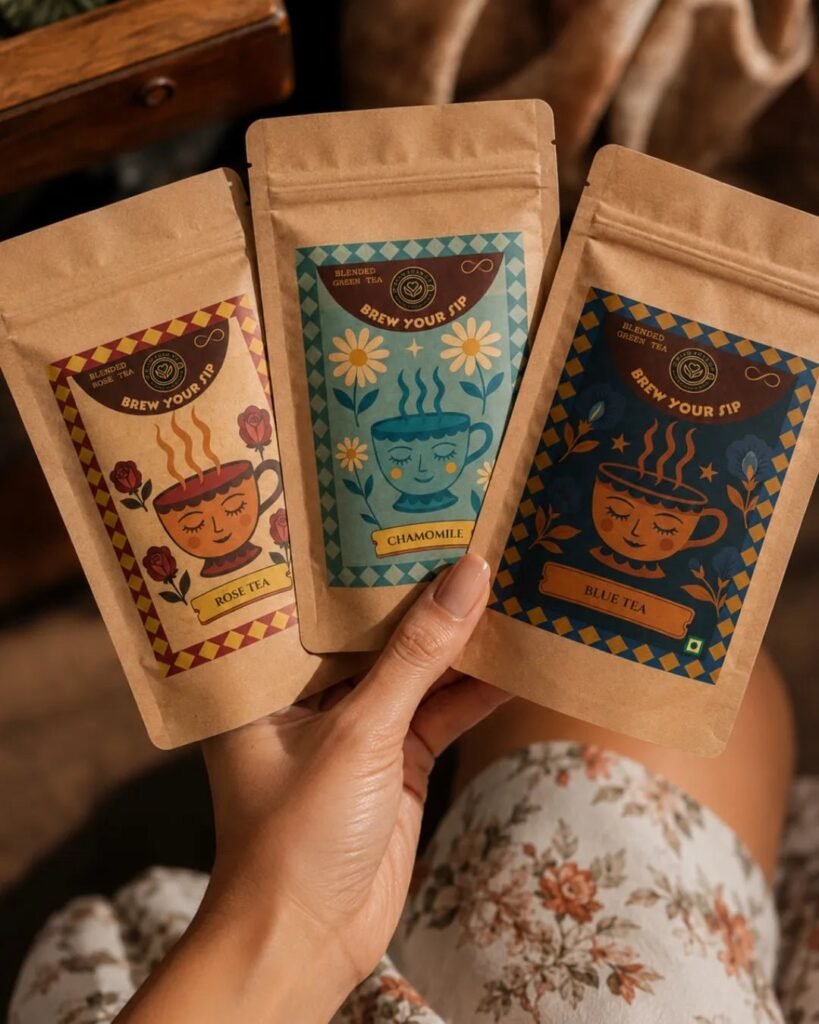
Our Rose, Chamomile and Blue Pea sampler is a mixed selection. It is not an entirely caffeine free set. The Mint Green, Chamomile and Blue Pea set also includes a green tea blend.
Keep the pouches separate and use the individual brewing instructions. A temperature suited to a delicate green tea should not automatically become the instruction for every flower or herb in your cupboard.
Do not choose from promised results alone
A tea’s name does not establish that it will make you sleep, lose weight or treat a condition. Choose the flavour and ingredients you want. If you need ingredient advice for pregnancy, medication use or a medical condition, ask a qualified clinician about the specific blend.
Common questions
Does floral tea contain caffeine?
It depends on the base. Jasmine or rose green tea contains caffeine. Pure flower infusions can be caffeine free.
Is white tea a herbal infusion?
No. White tea comes from the tea plant and should not be assumed caffeine free.
Does a pale colour mean low caffeine?
No. Colour is not a caffeine measurement. Use ingredient and product information.
Where can I compare herbal options by taste?
Read our existing herbal tea buying guide, then check the ingredients of your chosen product.