
Take your time.
Put the kettle on.
Assam black tea is a useful starting point for a strong, malty cup, especially milk chai. Darjeeling tea is often chosen for its aroma and is commonly enjoyed without milk. The best choice depends on the specific tea, its harvest and how you want to prepare it.
These are places of origin, not two fixed recipes. One Assam tea can taste different from another, and two Darjeeling harvests can feel surprisingly different. Use the comparison to narrow your first purchase, then read the details of the actual pack.
The differences that matter when buying
| Your question | Assam black tea | Darjeeling tea |
|---|---|---|
| What cup am I looking for? | Body, briskness and malty character | Aroma and harvest character |
| Is milk common? | Yes, especially with CTC chai | Often served plain to appreciate aroma |
| What should I check? | CTC or orthodox, blend and brewing use | Origin, flush and batch information |
| How should I start? | A small chai pack if milk is your habit | A sampler if you want to compare harvests |
Tea Board India describes Assam teas as strong, brisk and full bodied in its annual report. That regional description is a guide, not a promise that every Assam product will taste identical.
Choose Assam CTC for your everyday milk chai
If your ideal cup must hold its flavour after milk, start by looking at a tea sold for that use. Brew Your Sip’s Diamond Assam CTC is positioned for kadak chai. Our Special Masala Chai adds spices to an Assam CTC base.
CTC describes a processing method, not a place. Assam also produces orthodox tea. Likewise, “loose leaf” only means the tea is sold without being portioned into individual bags. CTC tea can be sold loose.
Before moving to a large pouch, try the Chai Collection sampler. Keep your milk and water amounts consistent when comparing its blends.
Choose Darjeeling when you want to explore aroma
For your first tasting, brew the tea without milk and use its packet instructions. Taste it once it is comfortably warm. Avoid judging the cup only by colour: a lighter infusion can still have plenty of aroma and flavour.
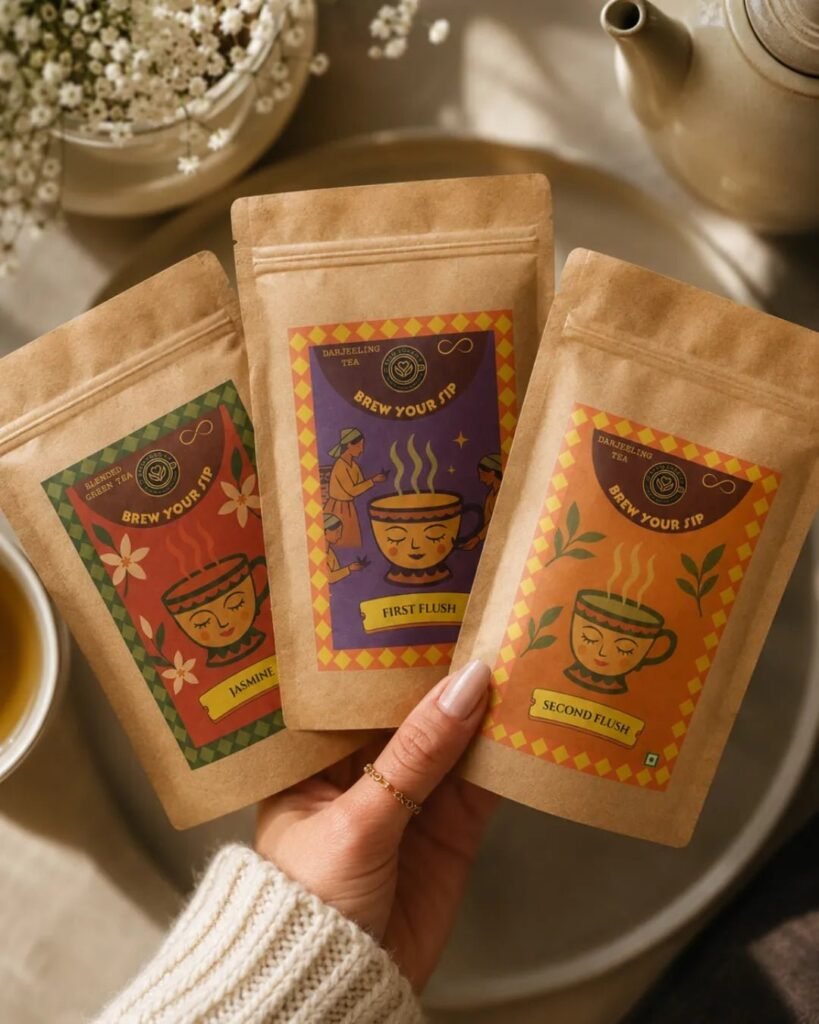
First flush generally points towards a lighter spring character. Second flush often offers a fuller cup and muscatel notes. For the harvest comparison, read our existing First Flush vs Second Flush guide.
What does Darjeeling origin tell you?
Darjeeling is a protected geographical name. Tea Board India operates a certification system tied to production within its defined region. Its Darjeeling information page explains that framework.
When shopping, look for clear product origin and ask for batch or sourcing information if you need more detail. A photograph of a hillside does not establish the origin of the leaves in a packet. Origin is also not a universal score for how much you will enjoy a tea.
A simple home comparison
Make one Assam cup and one Darjeeling cup according to their individual instructions. Label them, leave both unsweetened initially and write three notes: aroma, body and finish. Then prepare the Assam with your normal milk ratio. Choose for the drinking occasion you actually have.
Common questions
Can I add milk to Darjeeling?
You can. Taste it plain first because milk may cover the lighter aromas. Preference matters more than a rigid rule.
Is all Assam tea CTC?
No. Assam is a growing region, while CTC is a processing method.
Which is better for a gift?
Choose a chai sampler for someone who enjoys milk tea. Choose a Darjeeling sampler for someone curious about plain tea and harvest differences.